Why Doors Stick and Swell in Dubai, and How a Carpenter Fixes Them
By the Top Tier Technical Services team · Published · 6 min read
Quick answer
Doors stick because wood takes up and gives off moisture until it matches the humidity of the air around it, so it swells in damp air and shrinks in dry air. In Dubai, doors between air-conditioned rooms and humid areas move the most. Loose hinges and sagging frames cause the same symptoms, so find the cause before you plane anything.
Key takeaways
- Wood's moisture settles toward the relative humidity of the surrounding air, according to the U.S. Forest Products Laboratory.
- Seasonal swings in moisture are what cause trouble. Day-to-day changes are small.
- Paint and sealer slow moisture movement but don't stop it, so seal every edge of the door, including the top and bottom.
- Check hinges and the frame first. Planing a door that is only temporarily swollen can leave a gap when it dries.
Why do doors stick and swell in Dubai?
Wood is not fixed in size. The U.S. Forest Products Laboratory's Wood Handbook explains that the moisture in wood tends to come to equilibrium with the relative humidity of the surrounding air. A door that has taken up moisture swells and rubs against the frame, and one that has dried out shrinks and can leave a gap.
The handbook adds that the daily changes are small, and it is the seasonal swings in moisture that cause real problems. In Dubai, summer air outside is humid while the air indoors is cooled and dried by the AC. Doors that separate those two conditions, such as balcony doors, entrance doors and bathroom doors, take the biggest swings and are the ones that stick first.
What else makes a door stick, drag or fail to latch?
- Loose hinge screws, so the door sags and the top corner rubs the frame.
- A frame that has moved slightly, so the gaps around the door are no longer even.
- Layers of paint that have built up on the edges and in the rebate.
- A warped door that no longer sits flat in the frame.
- A latch or strike plate that has drifted out of line, so the door won't click shut.
- A new floor finish that has raised the floor level under the door.
How can you tell what is causing it?
- Close the door slowly and watch where it touches. Rubbing marks on the frame or door edge show you the tight spot.
- If it rubs at the top corner on the latch side, the door is probably sagging on its hinges.
- If it rubs along the whole latch edge and worse in summer, swelling is the more likely cause.
- If it catches at the bottom, look at the floor, the hinges and any new flooring.
- Look at the gap around the closed door. An uneven gap points to hinges or the frame rather than the door.
- Tighten every hinge screw before anything else. A surprising number of sticking doors are fixed at this step.
How does a carpenter fix a sticking door?
- Find where and why the door rubs, using the steps above, before removing any wood.
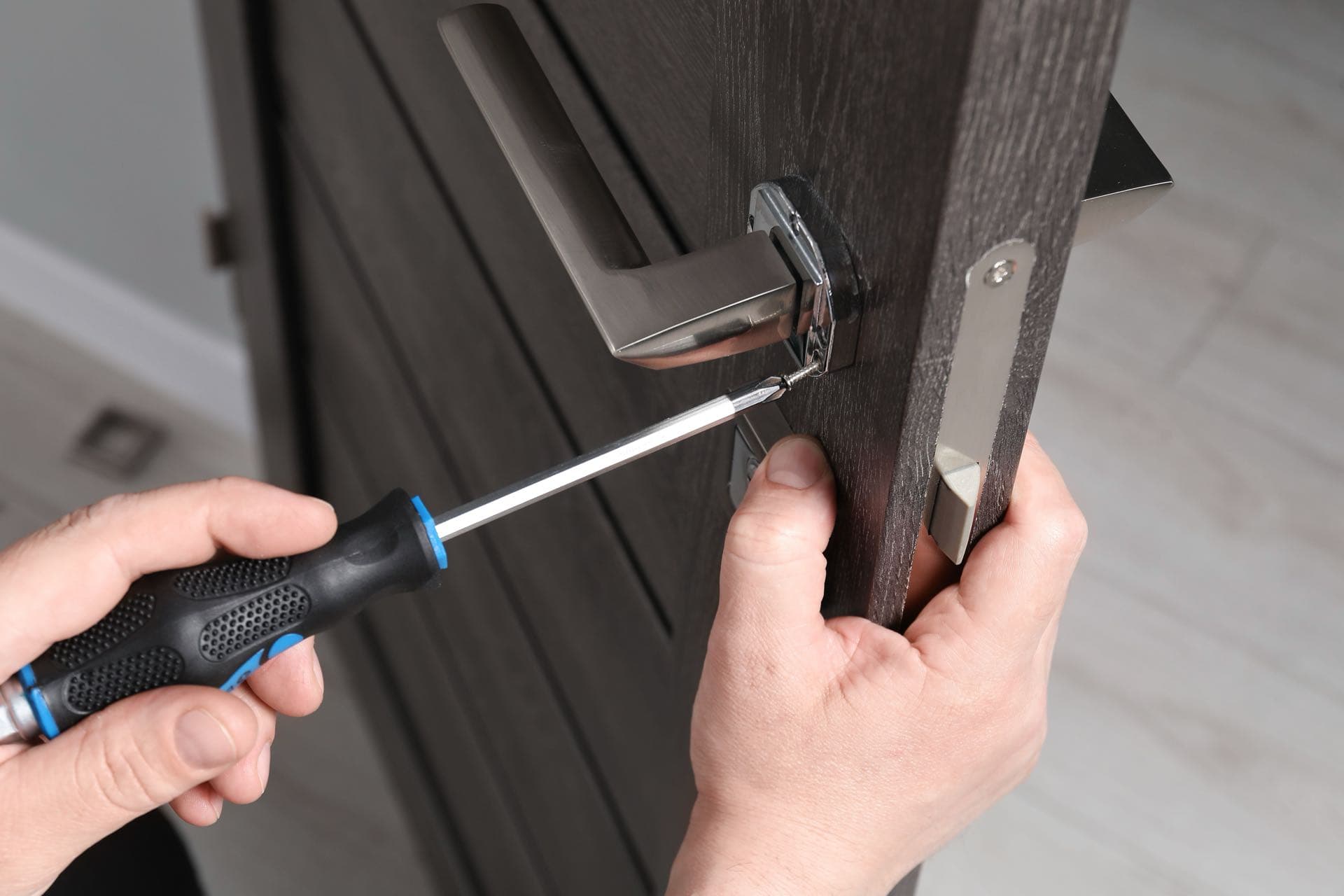
- Fix a sagging door by tightening the hinges, replacing stripped screws with longer ones that bite into the frame, or packing a hinge so the door sits true.
- Only if the door is genuinely swollen, remove a small amount from the tight edge with a plane or sander. Don't over-trim, because the door will shrink again when the weather dries.
- Re-align the latch, strike plate and lock so the door closes and holds properly.
- Seal every cut edge, and ideally all edges, including the top and bottom, with paint or sealer so the door takes up moisture more slowly.
- If the door has warped or the frame has moved badly, repair the frame or replace the door.
The Forest Products Laboratory notes that finishes slow dimensional change but do not stop it. A sealed door will still move a little, just more gradually. That is why trimming a door at the wrong time of year can swap a sticking door for a gappy one.
How do you stop doors sticking again?
- Seal every surface of new and repaired doors, including the top and bottom edges that are easy to forget.
- Keep bathrooms and kitchens ventilated so humid air doesn't build up around the doors.
- Fix any leak that is wetting a door, frame or floor, as a door that keeps getting wet will keep swelling.
- Don't build up thick coats of paint on the edges. Strip or sand back first if it has built up.
- Let a new door sit in the room for a few days before it is fitted and sealed. The handbook says that wood installed at about the moisture level it will live at is unlikely to change much.
Our door repair and adjustment service finds the cause before it cuts anything, and our carpentry team also repairs frames and fits new doors. If the paint on your doors is cracking or sticking, see our door painting service. To book a carpenter, contact us.
Frequently asked questions
Why does my door only stick in summer?
Wood swells as it takes up moisture from humid air, and Dubai's summer air outdoors is humid. Doors facing outside, or between cooled and uncooled rooms, take up the most. They often loosen again in cooler, drier weather.
Should I plane a swollen door?
Only if the swelling is permanent, or after you have checked the hinges. If the door is swollen only for part of the year, planing it can leave a gap when it dries. Seal any bare edge you expose.
Can I fix a sagging door myself?
Often, yes. Tighten all the hinge screws first. If a screw just spins, replace it with a longer one. If the door still rubs, or the frame has moved, it is a job for a carpenter.
Do I need to repaint after fixing a door?
Yes, if wood has been exposed. Bare wood takes up moisture quickly and will swell again. Seal and paint any edge that has been planed or sanded.
My door won't latch. Is it swollen?
Not necessarily. A latch that won't catch is often a strike plate that has moved out of line, or a door that sags slightly. Check the hinges and the strike plate before assuming the door has swollen.