Bathroom Waterproofing: Signs It Has Failed and What Repair Involves
By the Top Tier Technical Services team · Published · 7 min read
Quick answer
Bathroom waterproofing has probably failed if water stains appear on the ceiling or walls below or beside the bathroom, tiles are loose or hollow, grout keeps cracking, or the room smells musty with no pipe leak. Repair usually means finding the source, lifting the tiles, repairing the base, applying a membrane and flood testing it before re-tiling.
Key takeaways
- DEWA lists bathrooms, kitchens, water tanks and swimming pools as the most likely places for leaks.
- Rule out a plumbing leak first with a meter test: if the water meter doesn't move when nothing is running, the pipes are less likely to be the problem.
- Grout and tile are not a waterproof layer. The membrane under the tiles does the work.
- A proper repair ends with a water test on the membrane before the tiles go back.
What are the signs that bathroom waterproofing has failed?
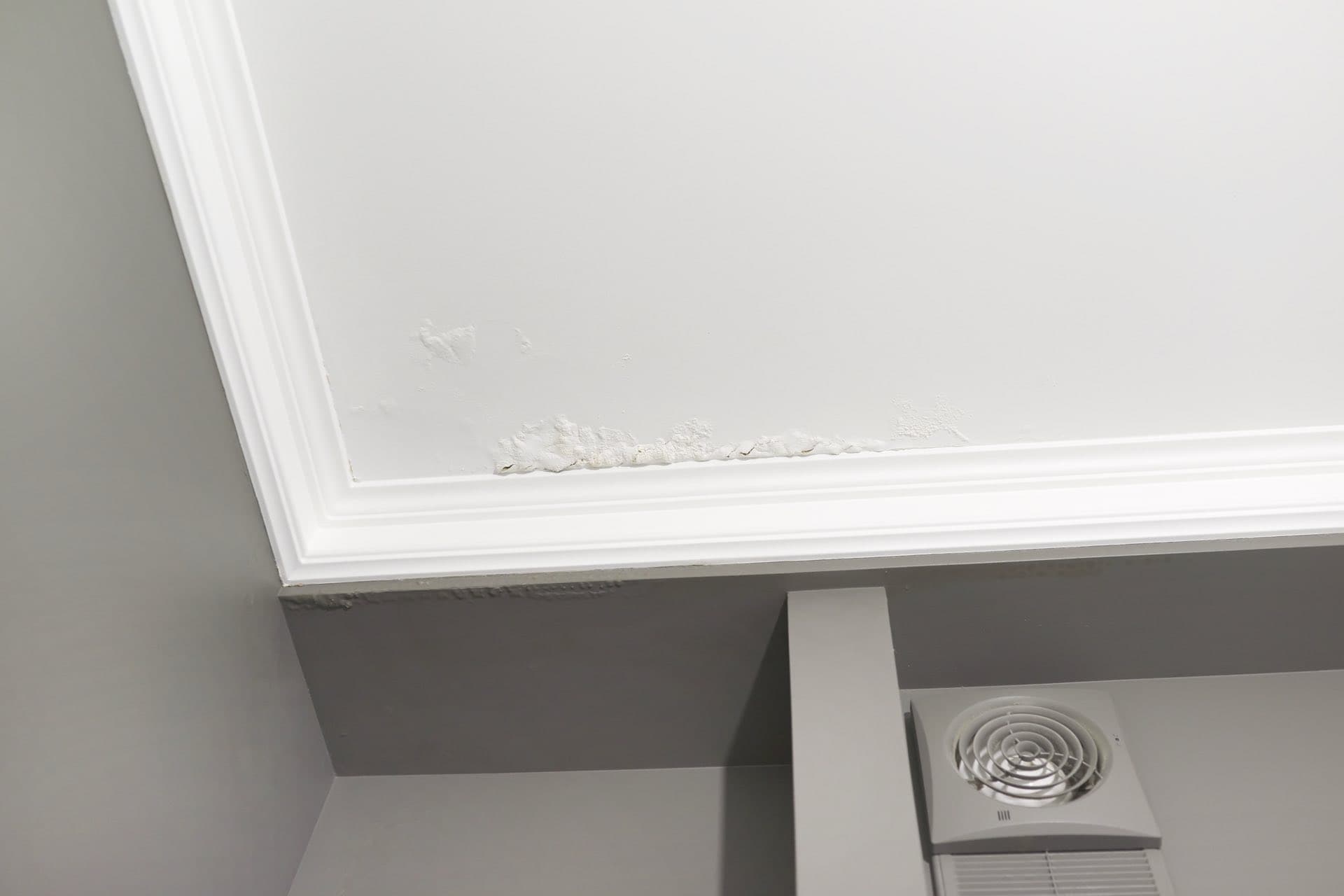
- Water stains, bubbling or peeling paint on the ceiling below the bathroom, or on the wall beside it.
- A damp patch, mould or a musty smell in the bathroom or the next room.
- Tiles that sound hollow, have come loose or have lifted.
- Grout and sealant that keep cracking, crumbling or turning black.
- Water that appears at the base of a wall or the door threshold after showers.
- White salt deposits on walls or the ceiling.
- Water that stays on the floor and doesn't drain properly.
The pattern is often the clue. If the stain gets worse after showers rather than all the time, the waterproofing is more likely than a pipe.
Is it the waterproofing or a plumbing leak?
Both cause the same stains, so rule out the pipes first. DEWA lists bathrooms, kitchens, water tanks and swimming pools as the most likely places for leaks, and it advises a meter test: switch off all water devices and check the meter. If the meter is still running, there is a leak.
- Switch off every tap and appliance that uses water. This includes the washing machine, dishwasher and any irrigation.
- Note the water meter reading. The U.S. Environmental Protection Agency suggests comparing the meter before and after a two-hour period when no water is being used. If the reading changes at all, you probably have a leak.
- Check the toilets. Put a few drops of food colouring in the tank. If colour shows up in the bowl after 10 minutes, the toilet leaks.
- If the meter doesn't move and the stain still gets worse after showers, the waterproofing, the grout or the shower waste is the more likely cause.
The meter test is not conclusive on its own. A small leak may move the meter very slowly, so a plumber can confirm with a pressure test. Our guide on finding hidden leaks explains how.
Why does bathroom waterproofing fail?
- The membrane has aged, cracked or lost its bond to the floor.
- The screed or substrate beneath has cracked from movement, so the membrane cracked with it.
- Weak details at the corners, the floor-to-wall joint, the drain and the pipe penetrations, where most failures start.
- The membrane stops too low on the shower walls, or is missing in the splash zone.
- It was damaged when the tiles were drilled, chipped or replaced.
- The floor doesn't slope properly to the drain, so water ponds and sits on the surface.
- Movement joints or sealant at the corners have failed.
Tiles and grout don't stop water. Grout is porous and tile joints open with movement, so a tiled bathroom depends on the waterproof layer underneath.
What does a bathroom waterproofing repair involve?
- Investigate: confirm the source with a meter test, moisture readings and, where needed, a pressure test of the pipes.
- Lift the tiles in the affected area. If the membrane has failed widely, the whole floor and the lower walls usually need to come up.
- Repair the base: fix cracks in the screed, correct the slope towards the drain, and clean and prime the surface.
- Apply the waterproofing membrane over the floor and up the walls to the height the system and the room require, reinforcing the corners, the drain and the pipe penetrations.
- Let it cure according to the manufacturer's instructions.
- Test it. A flood test holds water on the membrane for the time the specification requires and checks that nothing gets through, before any tile goes back.
- Re-tile with a suitable adhesive and grout, and use flexible sealant at the corners and movement joints.
- Dry out and repair the ceiling or wall that was stained, once the source is stopped.
Membrane types, wall heights and curing times differ between products, so a repair should follow the data sheet for the system used. In some cases a technician can treat cracked sealant joints and small cracks without lifting tiles, but if the membrane under the tiles has failed it generally has to be redone.
Who is responsible for a bathroom leak?
In a rented property, Dubai's tenancy law, Law No. 26 of 2007, Article 16, makes the landlord responsible for maintenance and repairs unless the contract says otherwise. In an apartment building a leak from your bathroom can damage the unit below, so report it at once and check your building's rules on who handles it. Don't paint over a stain before the source is found and stopped, or it will come back.
Our bathroom and wet area waterproofing finds the source first, then repairs or re-applies the membrane and tests it. We also do the re-tiling through our tiling service. If a stain has already appeared downstairs, read what to do about a ceiling water leak, or contact us to book an inspection.
Frequently asked questions
How long does bathroom waterproofing repair take?
It depends on how much of the bathroom needs redoing, the system used and its curing times, and the flood test. A technician can give you a schedule after inspecting the bathroom. Don't skip the cure or the test to save time.
Can bathroom waterproofing be repaired without removing the tiles?
Sometimes, for cracked sealant joints and small cracks. If the membrane under the tiles has failed, it can't be repaired from above and generally needs to be redone, which means lifting the tiles.
Is grout waterproof?
No. Grout is porous and tile joints can open with movement. The waterproof layer is the membrane beneath the tiles, which is why a good grout and sealant finish still needs it.
Will the mould go away after the repair?
Mould needs moisture to grow, so it should stop once the source is fixed and the area is dry. Existing mould still has to be cleaned or removed, and porous materials that stay damp may need replacing.
Do I need to waterproof the whole bathroom?
That depends on the bathroom's condition. A technician will advise on the floor, the shower area and the lower walls. The splash zones and the junctions are the areas that matter most.