How to Choose a Reliable Handyman in Dubai
By the Top Tier Technical Services team · Published · 6 min read
Quick answer
Choose a handyman who gives you a company name and trade licence number that you can check with the licensing authority, quotes the scope in writing and is clear about the jobs they won't do. Electrical alterations, gas and structural work need specialists, and tenants should get the landlord's permission before any repair.
Key takeaways
- Ask for the company name and trade licence number, then check them with Dubai's Department of Economy and Tourism, or with the free zone if the company is licensed there.
- Get the scope, materials and timing in a written quote before work starts.
- DEWA's regulations require the details of any new or additional electrical installation to be approved before the work begins, so changes to circuits are not handyman jobs.
- Under Dubai's tenancy law, tenants may not carry out maintenance works without the landlord's permission.
What does a handyman do, and which jobs need a specialist?
A handyman handles the small repairs and fixings that don't need a specialist trade. A good one is just as clear about what they won't do.
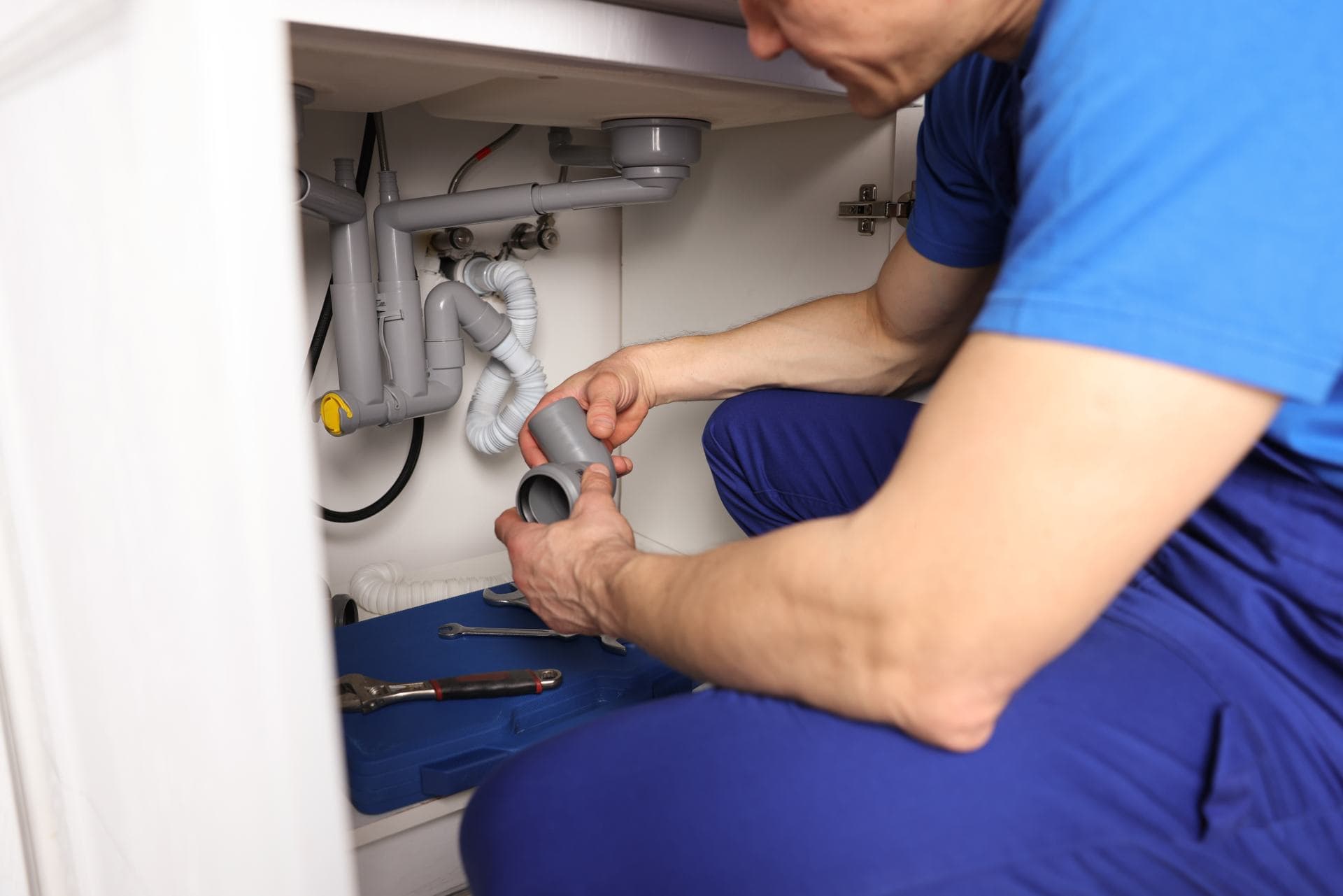
- Suitable for a handyman: hanging shelves, mirrors and curtain rails, assembling furniture, adjusting doors and hinges, replacing a tap washer or a toilet flush part, swapping a socket, switch or light fitting like for like, and small sealant and paint touch-ups.
- Needs a specialist: new circuits, rewiring and distribution board work, AC gas and refrigerant work, gas appliances, hidden leaks, waterproofing, structural changes and water tank cleaning.
The line is clearest for electrical work. DEWA's Regulations for Electrical Installations say that the technical details of any new or additional installation, large or small, must be submitted to DEWA for review and approval before it starts. A like-for-like swap is routine, but changing or extending a circuit is a job for a qualified electrician working within those rules.
How do you check a handyman's licence in Dubai?
- Ask for the company name and the trade licence number. A genuine company will give them without fuss.
- Check the licence with the authority that issued it. In mainland Dubai that is the Department of Economy and Tourism (DET), which licenses and classifies businesses. If the company is licensed in a free zone, check with that free zone's authority instead.
- Confirm that the licence is active and has not expired.
- Confirm that the licensed activities include the type of work you are asking for, such as building maintenance.
- Make sure the name on the quote, the invoice and the licence is the same.
Someone who gives only a mobile number and no company name can't be checked this way. That alone is a reason to look elsewhere.
What should you ask a handyman before hiring?
- What exactly will you do, and what is not included?
- Can I have the quote in writing, with the scope, materials and timing, before work starts?
- Who supplies the materials, and will you show me the receipts or the product details?
- Who will actually come to the property, and do they work for the company?
- Have you done similar jobs recently? Can you show photos or give a reference?
- Do you guarantee the work, what does that cover and for how long? Ask for it in writing.
- Does your insurance cover damage to my property?
- Will you clean up and take the waste away?
- How and when do I pay, and will I get an invoice with your company name and licence number?
Compare the scope of two quotes before you compare their totals. A lower figure that leaves out materials or clean-up is not really lower.
What are the warning signs to avoid?
- No company name, licence number or address, only a phone number.
- No written quote, or a quote that says only a total with no scope.
- A price far below everyone else's with no explanation.
- Pressure to decide immediately, or a demand to pay everything upfront.
- A promise to do any job, including electrical, gas or structural work that needs a specialist.
- Being told to buy materials from one particular shop.
- No invoice or receipt, or an invoice in a different name from the one on the quote.
Who decides and who pays when you are a tenant?
Check the contract before you call anyone. Under Dubai's tenancy law, Law No. 26 of 2007, Article 16 makes the landlord responsible for maintenance and repairs unless the contract says otherwise. Article 19 says tenants may not carry out maintenance works without the landlord's permission. So report the problem, agree who arranges and pays for the repair, and get the landlord's approval in writing before work begins.
Our handyman service covers small repairs and fittings, and we send an electrician, plumber or carpenter when the job needs a specialist. We will tell you which one it is before we start. To book a visit, contact us.
Frequently asked questions
How much does a handyman cost in Dubai?
It depends on the job, the materials, the access and how long it takes, so we don't quote a rate here. Ask for an itemised written quote, and compare the scope as well as the total.
Can a handyman do electrical work?
A handyman can do simple like-for-like swaps, such as a socket, switch or light fitting. Changes to circuits, the distribution board or wiring need a qualified electrician, and DEWA's regulations require new or additional installations to be approved before the work starts.
Should I pay a handyman upfront?
Avoid paying the full amount in advance. If materials have to be bought first, agree the deposit in writing, and pay the balance when the work is finished and you have checked it. Always ask for an invoice.
Do I need my landlord's permission for small repairs?
Article 19 of Dubai Law No. 26 of 2007 says tenants may not carry out maintenance works without the landlord's permission. Under Article 16 the landlord is responsible for maintenance unless the contract says otherwise. Ask first and keep the reply.
What should I do if the work is not done properly?
Keep the quote, invoice and photos, and tell the company in writing what is wrong and what you expect. If you can't agree, you can complain to the authority that licenses the company.