Kitchen Deep Cleaning: Extractors, Ovens and Cabinets
By the Top Tier Technical Services team · Published · 6 min read
Quick answer
Deep clean a kitchen from the top down: extractor and filters first, then the hob, oven, microwave and fridge, then cabinets, sink and taps, and the floor last. Remove grease thoroughly. In the United States, cooking oil, fat and grease were the first item ignited in half of home cooking fires that began with cooking materials. Never mix cleaning products.
Key takeaways
- The National Fire Protection Association (NFPA) says cooking is the leading cause of reported home fires in the United States, and unattended cooking is the leading factor.
- In NFPA's 2017–2021 data, cooking oil, fat, grease and related substances were first ignited in 51 percent of home cooking fires that began with cooking materials.
- The EPA advises cleaning dishes, crumbs and spills right away, and sealing cracks or openings around or inside cabinets, to discourage cockroaches.
- The CDC says never to mix bleach with ammonia or any other cleaner.
In what order should you deep clean a kitchen?
Work from the top down, so that grease and drips fall onto surfaces you haven't cleaned yet. Switch off and unplug appliances before cleaning them, and let hot surfaces cool.
- Extractor hood and filters.
- Splashback, wall tiles and the top of the cabinets.
- Hob and surrounds.
- Oven, grill and microwave.
- Fridge and freezer.
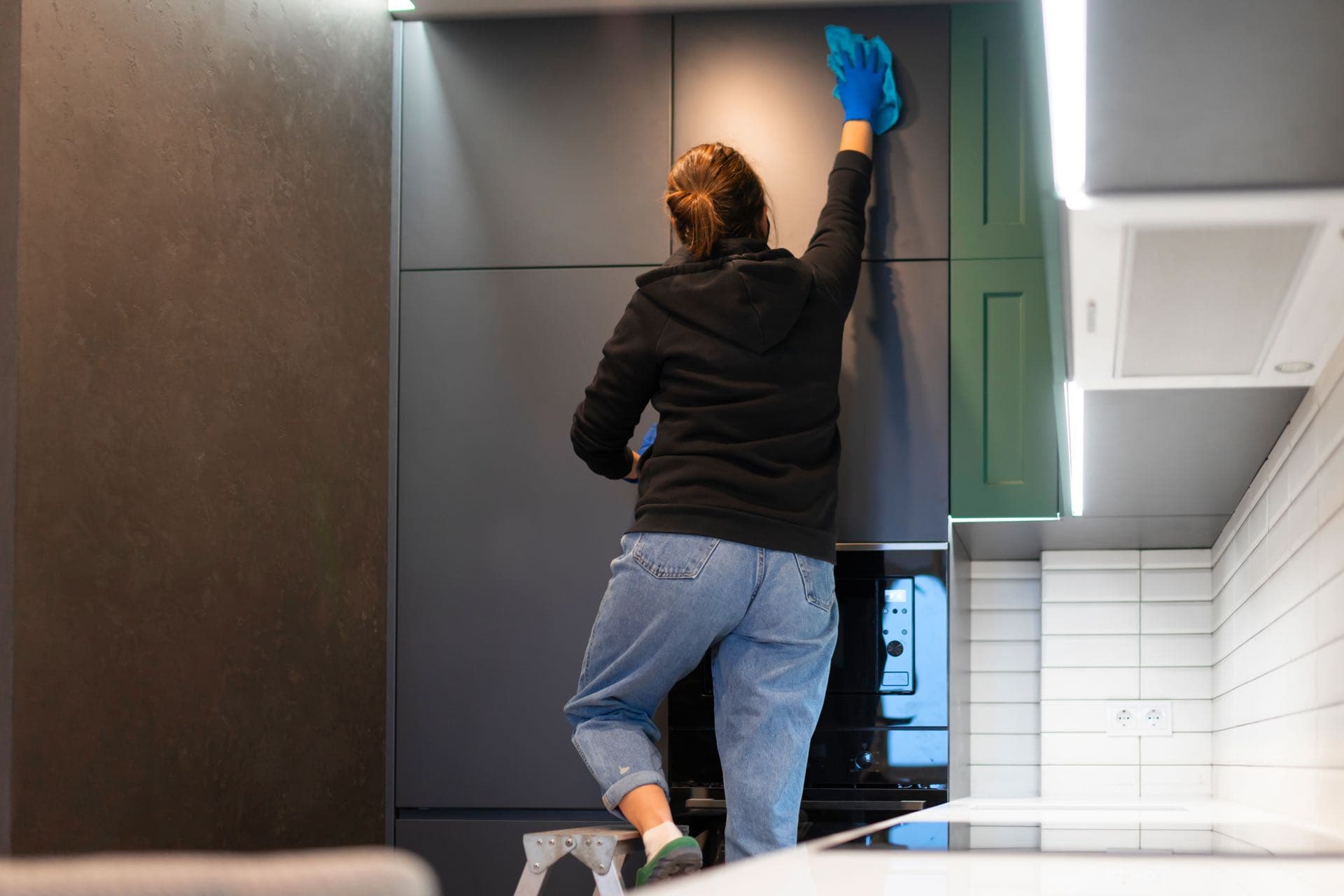
- Cabinets, drawers and handles, inside and out.
- Sink, taps and drain.
- Small appliances and worktops.
- Floor, including under and behind appliances you can safely move.
Why does grease build-up matter?
Grease is sticky, attracts dust and is flammable. The NFPA's research on home cooking fires in the United States found that cooking was the leading cause of reported home fires and home fire injuries in 2017–2021, and that unattended cooking was the leading factor. Cooking oil, fat, grease and related substances were the first item ignited in half (51 percent) of the home cooking fires that began with cooking materials. Those figures are from the United States, but they show why grease is fuel and why keeping the hob, hood and filters clean is worth the effort.
Cleaning doesn't replace safe cooking. The same research points to not leaving cooking unattended.
How do you clean the extractor, hob and oven?
Extractor hood and filters
Check the manual first. You can remove many metal grease filters and wash them in hot water with a degreaser, but you usually can't wash carbon filters, which need replacing. Wipe the hood inside and out, including the fan blades if you can reach them. A noisy or weak extractor may need servicing.
Hob
Remove the pan supports, burners or rings if the hob allows it, and soak and scrub them. Clean the surface and the gaps around the controls with a soft brush, taking care not to push water into the controls.
Oven and microwave
Remove the racks and soak them. Use an oven cleaner or a degreaser as the manufacturer instructs, ventilate the kitchen and wear gloves. Self-cleaning ovens have their own instructions. Wipe the microwave inside and out, including the door seal.
How do you clean the fridge, cabinets and sink?
- Fridge: empty it, check dates, wash the shelves and drawers, wipe the seals, and clean the drip tray and the area behind and underneath if accessible. Defrost the freezer if needed.
- Cabinets: empty them, wipe the insides, and degrease the doors and handles, where grease and fingerprints collect. Check hinges and look for signs of pests.
- Sink and taps: descale and polish. Our guide on hard water and limescale explains what causes the white crust.
- Drain: clear food debris and clean the strainer. A slow drain may need a plumber.
- Bins and bin area: wash and dry them, and wipe the surrounding floor.
How do you keep a kitchen clean and pest-free?
- Clean dishes, crumbs and spills right away. The U.S. EPA gives this advice for discouraging cockroaches.
- Seal cracks or openings around or inside cabinets, as the EPA advises.
- Store food in sealed containers, and empty the bin daily.
- Wipe the hob and worktops after cooking, so grease doesn't build up.
- Wash extractor filters regularly, as the manufacturer advises.
Use cleaning products safely. The U.S. CDC says never to mix bleach with ammonia or any other cleaner, and to open windows and doors to allow fresh air in when using products indoors.
When should you call a professional?
Call a team for a heavily greased extractor, a baked-on oven, a whole-kitchen deep clean before moving in or out, or when you want it done in one visit. If an appliance isn't working properly, such as a noisy extractor or a fridge that isn't cooling, it needs repair rather than cleaning. Our deep cleaning service covers kitchens, and our appliance repair service fixes the appliances. See also what deep cleaning includes. To book, contact us.
Frequently asked questions
How often should a kitchen be deep cleaned?
There is no official interval. Many households do a full deep clean once or twice a year, with the extractor filters and oven cleaned more often if you cook heavily. Wipe the hob and worktops after every use.
Can I put extractor filters in the dishwasher?
Some metal grease filters are dishwasher safe, but not all, and carbon filters aren't washable. Check the manual for your extractor before you wash them.
Is oven cleaner safe to use?
Oven cleaners are strong chemicals. Follow the label, wear gloves, ventilate the kitchen and keep children and pets away. Never mix them with other cleaning products.
Why is my kitchen always greasy?
Cooking vapour carries oil that settles on surfaces and builds up. A weak extractor or dirty filters make it worse. Clean the filters, use the extractor while cooking, and wipe surfaces regularly.
Does a clean kitchen help prevent cockroaches?
Yes, it helps. The U.S. EPA advises cleaning dishes, crumbs and spills right away, and sealing cracks or openings around or inside cabinets. Cleaning removes the food and water they rely on.