Sofa Cleaning in Dubai: Methods, Fabrics and How Often
By the Top Tier Technical Services team · Published · 6 min read
Quick answer
Vacuum a sofa regularly, treat spills straight away, and have it deep cleaned when it looks or smells dirty, with a method chosen for the fabric, such as hot-water extraction, steam or low-moisture cleaning. Check the care label first and make sure the sofa will dry fully. The U.S. EPA says dust mites live in upholstered furniture.
Key takeaways
- The U.S. EPA says dust mites are found in mattresses, pillows, carpets, upholstered furniture and bedcovers, and recommends a HEPA-filter vacuum on fabric-covered furniture.
- Check the care label before any cleaning. Fabrics and finishes differ, and the wrong method can leave rings, shrink or fade the fabric.
- Drying matters. The EPA advises drying wet items within 24 to 48 hours to prevent mould growth.
- Before you agree to extraction or steam cleaning, ask the cleaner how they will dry the sofa.
How often should you clean a sofa?
There is no official interval. Vacuum a sofa regularly, because dust and skin flakes build up in the fabric. The U.S. EPA says dust mites feed on human skin flakes and live in mattresses, pillows, carpets, upholstered furniture and bedcovers, and it recommends a vacuum with a HEPA filter on carpet and fabric-covered furniture to reduce dust build-up.
Many households have a sofa deep cleaned about once a year, and more often with children, pets, allergies or heavy use. Do it sooner if the sofa smells, looks dull, or has stains that don't come out. Treat that as a rule of thumb, not a standard.
What are the main sofa cleaning methods?
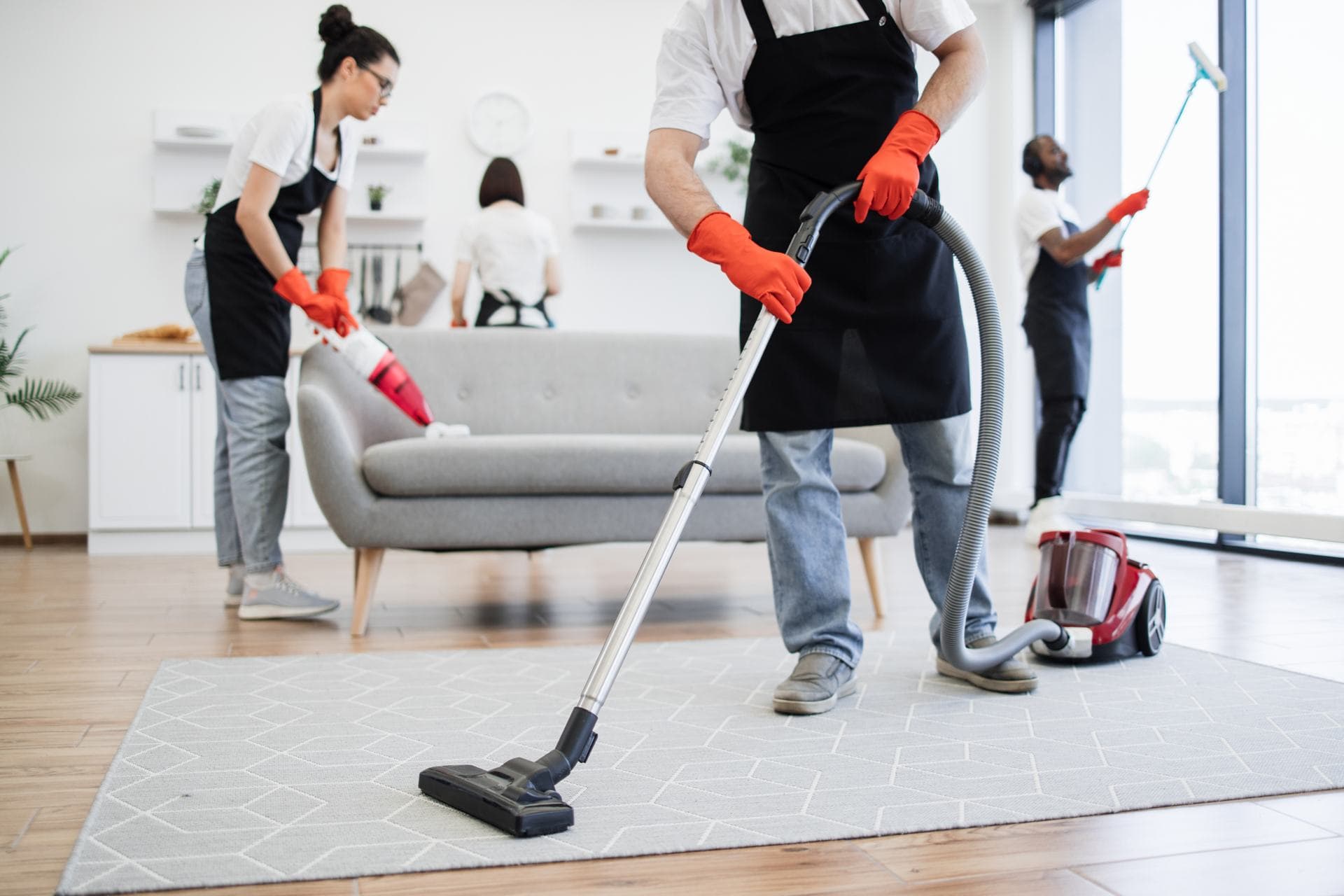
- Vacuuming: removes loose dust, crumbs and hair. Use a brush attachment, and a HEPA-filter vacuum if allergies are a concern.
- Spot cleaning: for fresh spills and small stains. Blot the spill rather than rubbing it, and use a product suited to the fabric.
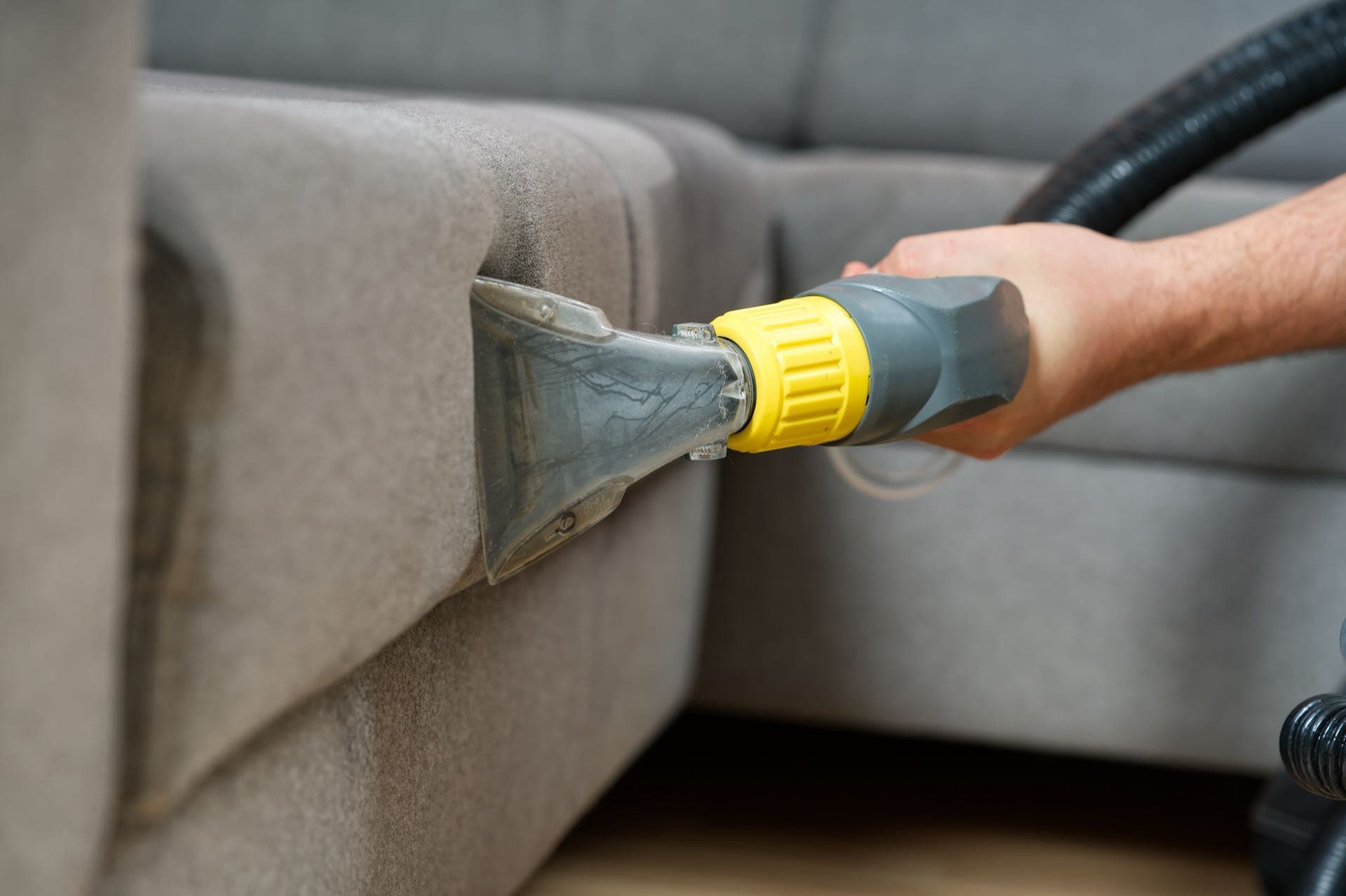
- Hot-water extraction: sprays a cleaning solution into the fabric and pulls it out with strong suction. It is thorough, but leaves the fabric damp, so drying time matters.
- Steam cleaning: uses heat and a little moisture to loosen dirt. It suits some fabrics and not others.
- Low-moisture or dry cleaning: uses little water, so the sofa dries quickly. It is suited to delicate fabrics and sofas that can't take much water.
- Leather care: leather is wiped with a suitable cleaner and conditioned. It should not be soaked.
How do you choose a method for your fabric?
Look for the care label, often under a seat cushion or on the frame. Some manufacturers use letter codes, such as W, S, WS and X. Retailers and cleaning companies commonly explain W as water-based cleaners, S as solvent-based cleaners only, WS as either, and X as vacuuming only. We did not find a single official standard for these codes, so treat them as a guide and follow the manufacturer's instructions for your sofa.
- Cotton, linen and blends: often tolerate water-based cleaning, but can shrink or mark if over-wetted.
- Microfibre and synthetic fabrics: usually durable, but check the label before using water.
- Velvet and delicate fabrics: can be marked or crushed by water and rubbing, so use low-moisture methods and a professional's advice.
- Leather and faux leather: don't soak them or use harsh solvents.
- Cushions with removable covers: check whether the covers are washable before washing them.
If there is no label, ask the cleaner to test a hidden area first. Don't mix cleaning products. The U.S. CDC says never to mix bleach with ammonia or any other cleaner.
Why does drying matter?
A sofa that stays damp can smell sour and grow mould. The U.S. EPA advises drying water-damaged areas and items within 24 to 48 hours to prevent mould growth, and the same principle applies to an upholstered sofa cleaned with water. Good airflow, an open window or the AC, and low humidity all help.
Ask the cleaner how long the sofa will take to dry, how they remove excess water, and what you should do afterwards. Avoid sitting on a damp sofa or putting covers back on until it is dry. In Dubai's humid summer months, drying takes longer, so plan for it.
What should you ask a sofa cleaning company?
- Which method will you use for my fabric, and why?
- Will you test a hidden area first?
- How long will it take to dry, and how do you remove excess water?
- Which products do you use, and are they suitable for children, pets and allergies?
- What happens if a stain doesn't come out, or the fabric is damaged?
- Is the price per seat, per sofa or per room, and what does it include?
- What is your trade licence number? In mainland Dubai the authority is the Department of Economy and Tourism.
Our sofa and carpet cleaning service checks the fabric and care label first and explains the method before starting. For the rest of the home, see what deep cleaning includes. To book, contact us.
For a single sofa or a full set, see our sofa cleaning service.
Frequently asked questions
Can I clean my sofa myself?
You can vacuum it and treat small, fresh spills by blotting. For a full clean, check the care label, test a hidden area and don't over-wet the fabric. A professional extraction cleans deeper, but it needs the right method for the fabric.
How long does a sofa take to dry after cleaning?
It depends on the method, the fabric and the humidity. Extraction leaves more moisture than low-moisture cleaning. Ask the cleaner for an estimate, and keep the room ventilated. A sofa that is still damp after a day or two needs more airflow.
Does steam cleaning kill dust mites?
Don't rely on any one method to remove dust mites completely. The U.S. EPA recommends regular vacuuming with a HEPA-filter vacuum on fabric-covered furniture to reduce dust build-up, and washing bedding in hot water once a week.
What should I do about a stain on my sofa?
Act quickly. Blot, don't rub, using a clean cloth, and use a product suited to the fabric. Test it on a hidden area first. If the stain doesn't lift, stop and ask a cleaner, because repeated scrubbing can spread it or damage the fabric.
Can leather sofas be steam cleaned?
Don't soak leather or clean it with harsh solvents. Wipe it with a suitable cleaner and condition it, following the manufacturer's care instructions.