Water Heater Leaking From the Bottom: Repair or Replace?
By the Top Tier Technical Services team · Published · 6 min read
Quick answer
Water at the bottom of a water heater often comes from a leaking fitting or valve above it, or from the pressure relief valve. These can usually be repaired. If the water is coming from the tank body itself, the inner tank has corroded through and the heater needs replacing.
Key takeaways
- Switch off the power to the heater and close the cold water supply valve as soon as you see a leak.
- Leaks from pipe connections, valves and the drain valve can usually be repaired.
- A dripping pressure relief valve is a warning sign. It should never be plugged or capped.
- A leak from the tank body means the tank has failed, so the heater needs replacing.
What should you do first when your water heater is leaking?
- Switch off the electricity to the water heater at its isolator switch or the breaker.
- Close the cold water supply valve on the pipe going into the heater.
- Put a container under the leak and keep the area dry, especially around electrical points.
- Don't open the heater's cover or touch the wiring.
- Book a plumber or water heater technician.
Where is the water from a leaking water heater actually coming from?
Water collects at the bottom of the heater, but that isn't always where it starts. Dry the outside of the heater and the pipes with a cloth, then watch where fresh water appears.
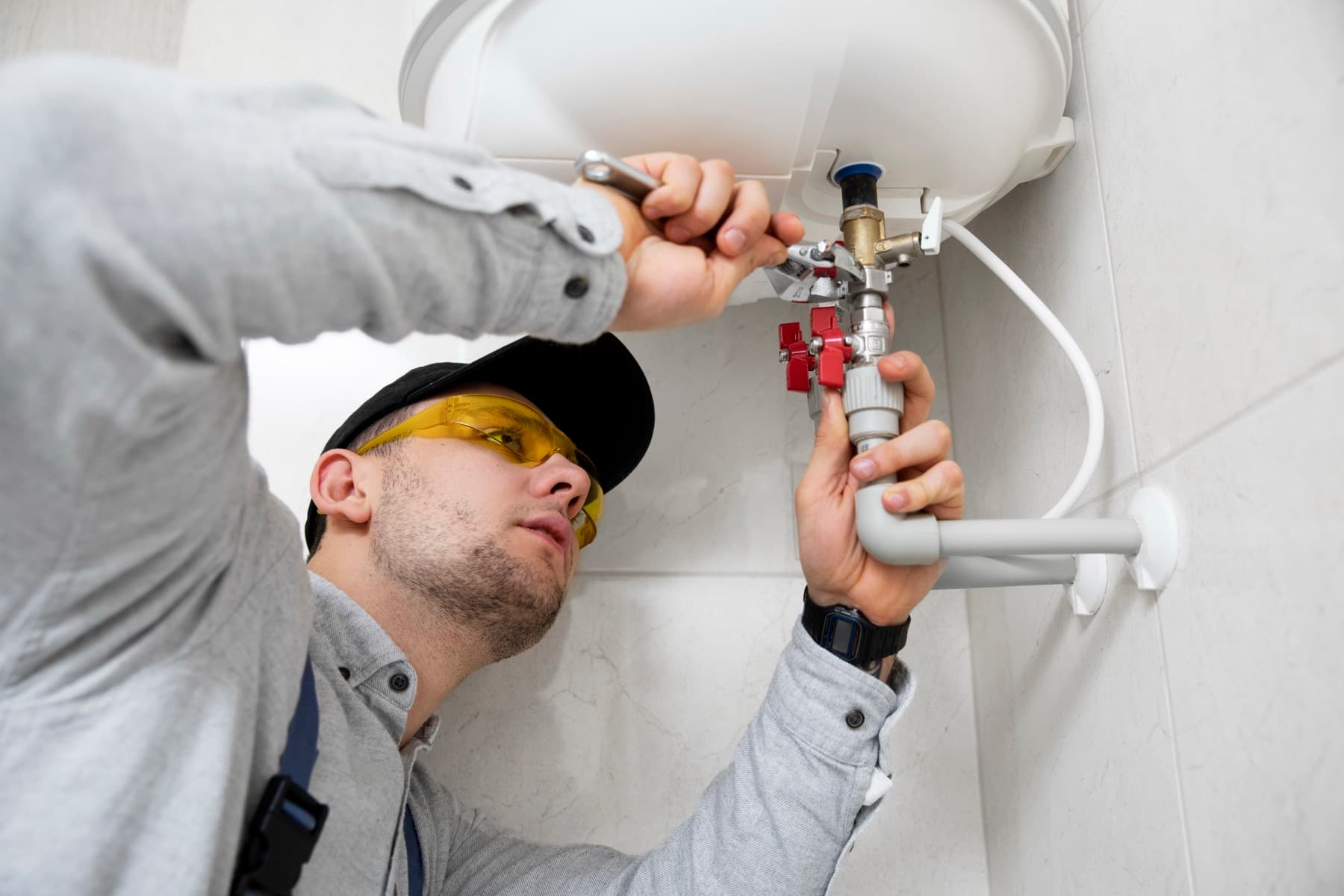
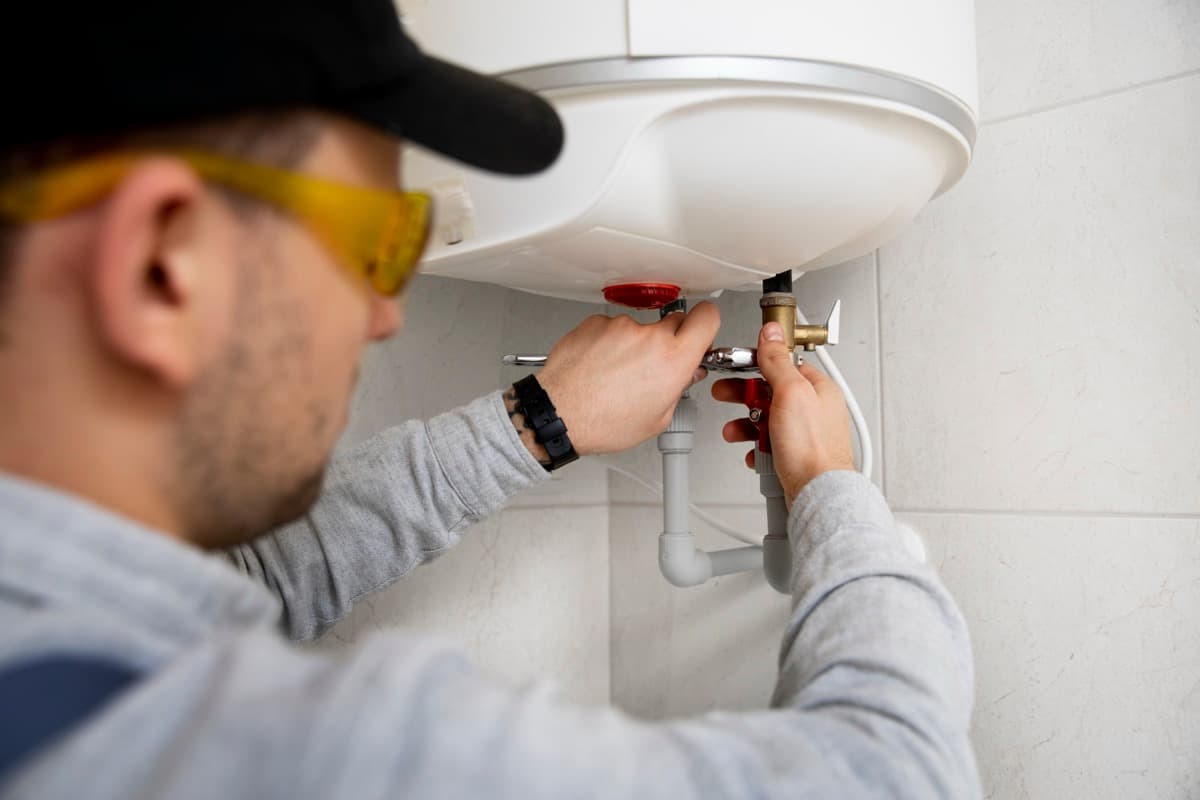
Pipe connections and valves above the heater
A loose or corroded fitting, a worn hose or a leaking isolation valve can drip down the side of the heater and collect underneath. This is usually a simple repair.
The pressure relief valve
Every storage water heater should have a temperature and pressure relief valve. It releases water if the temperature or pressure inside gets too high. Occasional drips can be normal as the water expands during heating, but a constant drip or flow means the pressure or temperature is too high, or the valve itself is faulty. Never plug, cap or remove this valve, because it is a key safety device.
The drain valve
Many heaters have a drain valve near the bottom. If it isn't fully closed or its washer has worn, it will drip. It can usually be tightened or replaced.
The tank body
If water is seeping from the tank's casing or the seams, with no leaking fitting or valve above, the inner tank has corroded. A leaking tank can't be repaired reliably, so the heater needs replacing.
Should you repair or replace a leaking water heater?
Repair makes sense when the leak is from a fitting, hose, valve or the drain valve, and the heater is otherwise working well. Replacement makes sense when:
- The tank body itself is leaking
- There is rust on the casing or rusty water from the hot taps
- The heater is old and has had several faults
- There is heavy scale and sediment inside an older tank
Dubai's hard water speeds up scale and sediment inside the tank. A U.S. Department of Energy guide notes that higher water temperature settings speed up sediment build-up, and describes a standard that calls for draining storage heaters twice a year to remove scale and sediment. Regular descaling is one of the best ways to help a tank last.
Our water heater service covers repair, replacement and descaling for electric and gas water heaters. For a same-day replacement of a single geyser, our plumbing brand Rapid Plumbers Dubai installs all brands. Contact us if your heater is leaking now.
Frequently asked questions
Is a leaking water heater dangerous?
The water itself can damage floors, walls and ceilings below, and water near electrical connections is a safety risk. A pressure relief valve that keeps discharging can mean the pressure or temperature is too high. Switch the heater off and have it checked.
Can a leaking water heater tank be repaired?
Not reliably. A leak from the tank body means the inner tank has corroded through, and the heater should be replaced. Leaks from fittings and valves can usually be repaired.
Why is my water heater's relief valve dripping?
Occasional drips can happen as the water expands while heating. A constant drip or flow suggests the pressure or temperature is too high, or the valve is faulty. Have it checked, and never plug the valve.
Can I keep using a water heater that leaks a little?
It's better not to. Small leaks usually get worse, and water near the heater's electrics is a risk. Switch it off and have the source found.
How can I make my next water heater last longer?
Have it descaled regularly, keep the temperature at a sensible setting, have the relief valve checked, and fix small leaks at the fittings as soon as they appear.